Sunday, April 3, 2022

Co-authoring New Lives

I’m the daughter of a journalist and I know the rule about not burying the lede. So, I’ll present the big news clearly at the beginning before going into some thoughts about it: 


Mike and I are happy to announce that we’re expecting identical twins in late (northern hemisphere) summer! 


There are so many thoughts and feelings that I’ve experienced since finding out first, that I was pregnant, and then, that we were expecting twins (TWINS?! From what I have heard, that means TWO babies!), but here, I’ll share just a few by way of—surprise, surprise—an academic metaphor. 

When I do research, I often like to work with other friends/colleagues (I like to call them “frolleagues” because that is a ridiculous word). When we publish, we are considered co-authors, and the official order the authors on the publication is seen as significant; if you are the first author, you get the most credit because it is supposed to mean that you have done the most work, though sometimes it can indicate that you have more status/name recognition than the other authors. 

I have two frolleagues with whom I work regularly, and we like to have as equitable a distribution of work as possible, so we simply take turns with authorship. I was second author on our first piece, I’m first author on our second, and I’ll be third author on our third piece, which we’ve already begun. For us, the title of “first author” is mostly logistical; someone has to take the role, and it simply indicates who the editors should contact.

However, I’m also working on a project with my advisor from OSU and a few other frolleagues, and with that one, my advisor is taking the lead in conceiving of and organizing the research. It is appropriate that she will be first author; she is doing the heaviest lifting and should get the most credit. 

I’ve been thinking of these two experiences with authorship a lot since finding out that I am pregnant. I have long been guided by the beautiful Frederick Buechner quote, which I’m sure I’ve shared here before: "Words are power, essentially the power of creation.  By my words, I both discover and create who I am.  By my words, I elicit a word from you.  Through our converse, we create each other." My graduate work on language at Ohio State only furthered my belief that we co-author each other into being. 

My religious belief system also involves ideas of authorship, namely that God is the Author of Life. And yet, paradoxically, many Christians believe that God allows people to participate in the authorship of their own lives. In other words, God is our co-author! How astonishing! How unfathomable!

I believe this to be true with any aspect of my life, but as I contemplate my new role as a parent, it seems especially relevant. My training and experience in early childhood makes it plain how profoundly significant parents and/or other caregivers are; clearly Mike and I will be important co-authors of our children’s lives. But we won’t be first authors. So, the question becomes, how do we both contribute to their unfolding narratives and surrender those narratives to themselves, to others, and to God, who we believe already loves them most and best?

This is, of course, a broader question about control, and as usual, I find I’m being asked to surrender control in so many ways. Those of you who have known me for longer than five minutes will have discovered that I am quite opinionated about how things should be. As I co-author my life with God, I am tempted to provide suggestions (which sometimes border on directives) on how things should be. At times, things do work out as I ask and hope. 

However, it seems to me that God has frequently heard my suggestions and gone in another direction, a better direction. Does that mean God is a perverse, authoritarian co-author, ignoring or even actively refusing my ideas? No, it means God knows the possibilities better than I do. It’s a bit like writing with my advisor: we are following her lead because she knows the field better than we do. One of my favorite things about getting older is that my list of times when God has surprised me for the better keeps getting longer, which makes it easier to trust when things don’t go as planned. The news of twins—albeit probably the biggest change of plans yet—is just another instance of my first draft of my life being revised. I can already see how I am being changed for the better by this experience.

Another, less academic metaphor that I’ve discovered recently is Alison Gopnik’s comparison of parents as carpenters vs. gardeners. There are parents who see their role as meticulously crafting a particular type of person and parents who want to cultivate an environment for their children to grow into whomever they will become. I want to be a gardener parent, but I know I have strong carpenter impulses. 

When we were expecting just one baby, I could feel myself getting into first author, carpenter mode. I felt my control muscles flexing in response to almost any aspect of our future child’s life. But then we learned that there was a revision (quite literally: I discovered the news only when the ultrasound tech changed the number of fetuses on the information screen from 1 to 2…). Once I could formulate some kind of thought, it was, “Well, it’s all hands on deck now!” I’m being asked to depend even more on my community, meaning that I will need to ask for and accept even deeper co-authoring relationships. I will need more help tending the garden in which our children will grow. And I’m finding that there is a surprising and delightful joy in my humble first attempts—first of many!—to release my desire to be the primary constructor of my children’s lives. 

I hope you have a wonderful week, and that any surprises you face rewrite your story for the better.

Sarah/Mouse 

Friday, December 24, 2021

"Will We Be In Person?"

Hi, Everyone, 

“Will we be in person?” 

This is a question that has echoed throughout both 2020 and 2021. Everyone from performers to lawmakers, from healthcare workers to restaurant workers has been wrestling with the uncertainty of whether Covid would mean switching to an online format. In some cases, the question was about switching back and forth repeatedly between being in person or online (or some kind of hybrid version). 

I would contend that there is no group of people who have been asking this question more fervently than teachers. As a teacher of teachers, my work has been significantly impacted by these decisions. Last year, all of my courses were online and synchronous; this year, we were back in person. Last year, I could see my students’ entire faces and that was about it; this year, I can see all of them except a good portion of their faces. Last year, I could be about a foot from my students, albeit on a screen; this year, I was expected to try to stay at least 6 feet from them. Last year, we had to deal with not having any field placements for our students (in other words, no opportunities for them to be in schools contextualizing and applying what they were learning in their courses); this year, they had placements, but they were constantly interrupted, shortened, moved to a virtual format, etc. because of Covid complications. 

In short, last year we weren’t “in person”; this year, we were. 

On occasion this fall, while I was in my building on campus or just around Millersville, I would run into a student who was in one of my online courses last year. There was always something a bit surprising about it, though I can’t quite put my finger on it. Of course, sometimes they were much taller or shorter than I’d pictured them. But it was more than that. There is something rather stunning—shocking even—when we go from 2D to 3D. 

There is a kind of lightly buzzing energy that is generated when we’re with people that can really only be described as presence. Most of the time, I don’t think we notice it much. Introverts might notice that too much time in the presence of people drains them while extroverts notice the opposite. But how often do we pay attention to the specific, unique presence of someone right in front of us? How we feel when we’re with them? How their multifaceted being—embodied spirit/spirited-body—is manifesting right in front of us? 

For Christians, there is, perhaps, no better time to ask the question, “What, exactly, does it mean to be ‘in person’?” than right now, during Advent, the weeks preceding Christmas (also the only time of year when I am most likely to update my once-weekly, now-yearly, few-days-before Christmas blog…). This is the time of year that Christians are reminded that God entered creation—quite literally “in person.” 

I was reading the first chapter in Luke a while back and noticed something I’d never caught before. It came right after the part where Mary and Elizabeth, both experiencing miracle pregnancies, greet each other shortly after Mary has been told she will be giving birth to the Son of God. Upon hearing Mary, the baby inside Elizabeth (John the Baptist) “leaped in her womb” (v. 41). What follows are two profound exclamations, two monologues, as it were, about the monumental change that the baby Mary carries will bring about. 

Up until this point, I’d always seen them as awkwardly disjointed, probably because of how the Bible is cut up visually or how it is read in church services. I’d never before considered these two speeches as interdependent, that Mary’s—known as “the Magnificat”—is a direct response to Elizabeth’s. But now, it seemed so completely obvious. Three times, Elizabeth uses the word “blessed” (twice to describe Mary and once to describe her baby); Mary then famously predicts, “From now on all generations will call me blessed” (v. 48). Elizabeth notes that Mary “has believed that the Lord would fulfill his promises to her” (v. 45); Mary then expands the scope of the Lord’s promises as she concludes her monologue describing God’s mercy “just as he promised to our ancestors” (v. 55). I have become convinced that it is a mistake to think of these two passages separately. 

Okay, fine. Whatever. Who cares about my preference about the best way to read a tiny portion of the Christian Bible (which, depending on your beliefs, may or may not carry any weight for you)? Well, as I have continued to mull over this exchange between these two women, I have come to believe that it has some pretty important implications for how we can think about presence, about what it means to be “in person.” 

I’d never thought about Elizabeth’s role in helping Mary understand at least some of the significance of the profound mystery that she was only just beginning to experience. After agreeing to her incredible new role by saying simply, “I am the Lord’s servant [. . .] May your word to me be fulfilled” (v. 38), we get none of Mary’s thoughts about being the earthly mother to the Incarnate God until she travels to Elizabeth and hears her cousin’s jubilant and prophetic greeting. 

There were a lot of miraculous and mysterious events happening surrounding these two pregnancies and a few more wouldn’t be all that surprising. For instance, it would be plausible that John the Baptist could have leaped in Elizabeth’s womb the moment God became human as an embryo. Or an angel could have come to Elizabeth and informed her of this most significant news. But this didn’t happen. It wasn’t until the two women met quite un-miraculously face to face that the baby in Elizabeth recognized the divinity in her cousin. In other words, being in person helped both the two women (and John) to appreciate the person—the God—in Mary. 

No wonder Mary stayed with Elizabeth for 3 months after this! Elizabeth helped Mary see God inside of her! Who wouldn’t want that? 

This scene has got me wondering who does this for me. One of the main things I believe about Christmas (and about my religion more broadly) is that God has chosen to dwell in each of us in a physical, tangible way. Knowing that humans need not just abstractions, doctrine, and spiritual experiences but meals shared, embraces, and spoken words, my religion centers around the idea that humans experience God most closely when God is incarnate—in person—among us. 

I’ve had a lot of practice recognizing God in other people, but it can be a lot harder recognizing God in myself. I don’t want to be prideful or narcissistic. But with the help of many people over many years, I am starting to see that to deny or ignore the work God is doing in me is wrong. My job is to look for God anywhere, even in myself. If anything, Mary’s example demonstrates that only profound humility can result from a true recognition of God’s indwelling. 

Truthfully, like Mary, I can’t see God-in-me in isolation. I need Elizabeth—many Elizabeths—to help me see the bigger picture of my life. I need Elizabeths who will declare with awe and excitement when they see God in me. I need Elizabeths who will pronounce me blessed and will point out God’s fulfilled promises in my life. And of course, I need to be Elizabeth to people over and over, being willing not only to sense God’s presence in someone but to communicate it to them. 

So, will we be “in person”? Will we accept this strange and beautiful challenge to not only be open to divinity in those around us but to communicate our experience of it with reverence, exuberance, and humility? Will we accept it when others do this for us? 

To those who celebrate it, Merry/Happy Christmas, and to everyone, Happy 2022!

Sarah/Mouse


Detail from Visitation, a 15th century painting by Fra Angelico
which you can see in full here

Sunday, August 30, 2020

Goodnight, Dissertation!

Hello, everyone,


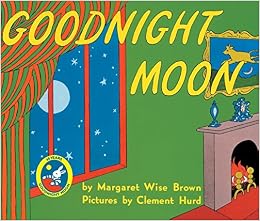
Despite my love of literature for young children, I must confess that I never cared much for one of the most beloved children’s books, Goodnight Moon written by Margaret Wise Brown and illustrated by Clement Hurd. It is a simple story, in which an old rabbit is helping a young rabbit go to sleep by saying “Goodnight” to the various things in and around their bedroom. I think I didn’t like it mostly because Hurd’s illustration style just didn’t appeal to me. It even struck me as a bit creepy. 


Goodnight Moon: Brown, Margaret Wise, Hurd, Clement: 8601400225332:  Amazon.com: Books


I felt I needed to keep this opinion on the down-low when I was getting my MA in Children’s Literature at Hollins University because Brown went to Hollins. There were frequent references to her throughout my years there. One of the main gathering spaces was nicknamed the “Great Green Room.” We wondered occasionally about the connections between the bunnies hopping around our bucolic campus and Brown’s multiple rabbit books. A professor talked about how she heard Brown speaking to her during her own writing process. Needless to say, I mentioned my lack of total appreciation of Brown and Hurd’s beloved book to only my closest confidantes. 


However, in the past few months, I have been reevaluating my earlier stance. Don’t get me wrong: I still am not excited about Hurd’s illustrations. But I’m starting to see that Brown’s text was rather genius particularly as a bedtime book. 


Many of you know that I have a habit of falling asleep quite quickly, perhaps in some awkward or inappropriate places. However, when I am in a particularly busy or stressful season of life, my mind is on overdrive, and it can take me quite some time to calm down enough to fall asleep. Let’s just say that between job searching, writing and defending my dissertation, transitioning to life in a pandemic, and continuing to consider how I can respond to the realities of systemic racism, there have been quite a number of thoughts racing through my mind in the last year. 


Several months ago, I started saying “Goodnight” to the various things that popped into my mind as I was trying to fall asleep: 

“Goodnight, Chapter 5 of my dissertation.” 

“Goodnight, Chapter 3 revisions.”

“Goodnight, advisors.” 

“Goodnight, news.” 

“Goodnight, Covid.” 

“Goodnight, email to … that person I have to email.” 

“Goodnight, telehealth appointment I need to make before my student insurance runs out.”


And so on, just like the young rabbit says goodnight to the moon, to the comb, and the brush, and the bowl full of mush. 


It may seem silly, but I found that once I had said “Goodnight,” to these different thoughts and concerns in my mind, I could let them go for the time being. One by one, I could put the items in my cluttered mind to bed. I wasn’t dismissing these thoughts; I wasn’t telling them “Goodbye.” That wouldn’t have worked because none of the things I was thinking about were insignificant. But by simply saying, “Goodnight,” I could recognize that we would rejoin company the next day, but for now, I needed my rest.


A few weeks ago, I successfully defended my dissertation, thanks to the help of more people than I can count who have supported me along this journey. After I made the revisions my committee desired, I finally submitted the final version of my project. It might seem that after all this time and work, I could finally say “Goodbye” to my dissertation, not just “Goodnight.” However, it is expected that I publish off of this writing in the coming years, and I’m eager to do so. 


This time, though, instead of saying, “Goodnight, dissertation (and see you tomorrow)!” I am needing to say, “Goodnight, dissertation (and see you in a few weeks),” because I have a new set of pressing thoughts to tuck into bed each night. 


I mentioned that over the course of the last year, I was applying to professor jobs across the country. After much work and discernment, I accepted a faculty position at Millersville University in eastern Pennsylvania in the Department of Early, Middle, and Exceptional Education. A while ago, Mike and I also bought a house in Millersville, although because I’m teaching remotely for the fall semester, we likely won’t be moving until the break between terms. I feel incredibly fortunate to be at Millersville—I have been welcomed and supported from Day 1, and I truly believe it will be a good fit for so many reasons. Speaking of Day 1, days after hearing that my dissertation was finalized, I jumped into the semester and just finished my first week of teaching on Friday. 


As I look back on the past few months, I am a bit exhausted, but I am also astonished and grateful at how things have fallen into place for us. I find myself saying new “Goodnights” each evening:


“Goodnight, syllabus.”

“Goodnight, neighbor boy who is mowing our lawn while we’re in Ohio.”

“Goodnight, figuring out how to host Zoom breakout rooms.”

“Goodnight, emails to students.”

“Goodnight, HR paperwork.”

“Goodnight, minor cricket infestation in a basement 7 hours away.”

“Goodnight, imposter syndrome.” 

“Goodnight, furniture we should maybe get rid of before we move.”

“Goodnight, grading.”

And so on. 


So, as I transition from one chapter of life to another, I am finding that Margaret Wise Brown isn’t exactly speaking to me, but her words are providing a structure for me as I speak to my own life. I’d be curious to know what words have done the same for you. 


Have a good week,

Sarah/Mouse


Monday, April 13, 2020

Stripping Away: Easter Monday 2020

The house Mike and I live in needs to be painted. We’ve found a company to do the job, and they’re scheduled to come and do the initial power washing this week. This will, of course, remove dirt and moss and other build-up, but it will also remove old bits of paint that are no longer adhering to the house. Without this process, when the painters apply the new paint, it will not go on smoothly and it has a much greater potential to chip or bubble. I imagine that, in addition to the power washing, the painters will also need to scrape parts of the house manually. So for a short time, before the new coat of paint, the house will look worse. It will look older and weaker. It will be laid (at least a little) bare. 

There is an irony in this: adding something (in our case, a vibrant new house color) requires taking something else away in order for it to stick. 

When I was in college, I went through a pretty rough period when I was afraid of losing something that I considered to be a big part of my identity. In thinking through what this might mean, I wondered who I would be without that part of me. I was essentially asking, “Without ____, would I still be me?” and “If I am not ____, who am I?” This led me to interrogate other aspects of my life I considered fundamental. One by one, I asked what I would be without those identities: If I am not a writer, who am I? If I am not an artist, who am I? If I am not a daughter, a sister, a friend, a roommate, a university student, who am I? If I am not a South African, a citizen of the US, a Washingtonian, who am I? If I am not a Christian, who am I? One after another, I was stripping away the various layers of paint that had joyfully and painstakingly built up over my two decades of life, as I tried to see the house underneath. 

It was only as I exhausted the list of descriptors I had been claiming, that I came to realize that I was asking the wrong question. “Who am I?” wasn’t ultimately what I wanted to know. Rather, I should ask, “Whose am I?” That has proved to be a much more fruitful question for me to ask in the years since then.

I think a similar phenomenon is happening now. 

In such a short amount of time, Covid-19 has stripped us of so much, and we have been forced to ask some pretty essential questions. Individually, we might be asking, “Without a schedule or any of my regular activities, who am I?” “Without physical contact with those I love the most (or without our normal stores of patience because of too much contact with them), what are my relationships?” “Without an office, a career, a paycheck, what is work?” As the number of deaths rise around the world, some are undoubtedly asking, “Without this person living in the world, who am I and what is life?” 

Collectively, we might be asking, “Without the freedoms of movement and assembly that we were used to, what is society?” “Without regular worship services, what is my religious practice?” “Without the abundance many have enjoyed in the US, what is a grocery store? A shopping mall? An ER?” “Without a building and classmates, what is school?”

Traditionally, when Christians celebrate Lent, the 40 days leading up to Easter, they might fast or give up something for the season. People often give up physical indulgences like junk food or coffee or (less traditionally) Facebook. Recently, there has been a trend among some Christians to “add something” during Lent rather than “subtracting something.” I believe the intentions behind this trend are generally worthy. It attempts to engage Christians in the meaningful work of putting on the likeness of Christ, which requires us to live not as passive people merely following a limiting set of Thou-Shalt-Nots, but rather as active, participatory people.

But while I have no problem with people “adding something” during Lent, I worry that we miss out on one of the biggest gifts of the season if we don’t insist on also “subtracting,” on stripping away in order for Something New to come about. I worry that in a culture oriented around addition and acquisition, we are too easily convinced that if we focus on adding this 10 minute Christian podcast to our daily routine or that new prayer practice before bedtime that our schedules and our heads and our hearts will fill to overflowing. I worry that these (probably very good) things we want to add to our lives won’t have enough space to take deep roots until we clean up, throw out, strip away—a kind of spiritual Marie Kondo exercise, as it were. 

In the last few weeks, church leaders around the world have been trying to respond to the question they know their congregations are asking: “How do we have Easter during Covid-19?” But now, the day after Easter, we are left with another question: “What happens when we get through Easter and we’re still living in Lent?” Our painful period of stripping away hasn’t mapped onto the Christian calendar neatly. Is it possible to live “He is risen” lives in the midst of an “It is finished” world? Maybe you can manage it, but I cannot; my hope is too weighty to carry for very long. It is impossible.

But here is where Easter makes a difference. It allows us to move through the impossible: “Impossible unless…” “Impossible, and yet…” “Impossible, except if…” 

The only way I can reconcile hope and devastation, the exuberance of new life and the searing, enduring pain of loss—now or ever—is if I see hope as something to be carried together. I heard a priest recently pray for “those on the front lines of hope,” but we know that nobody should be on the front lines indefinitely. What if we share the burden of our hope the way geese fly in a V, taking turns as leader to provide a wind break for those behind? Even Jesus needed help carrying the cross. I can’t muster up enough hope to keep me going forever, but I can hold it for a while for others and trust that they’ll do the same for me. Who knows? Maybe we can build some herd immunity against despair. 

Fasting of one sort or another (whether forced or voluntary) causes us to be vulnerable and weak, dependent on the help and patience of others. It is in the gaps that are left when we subtract from our lives that we recognize not just who we are but to whom we belong. 

Recently, I checked in on a student teacher I was supervising whose field placement in a first grade classroom had been cut short when Ohio’s schools closed with very little warning. I asked him what he was missing about it, but then I asked what Covid-19 had given to him. He paused and told me, “I’m even more sure that I want to be a teacher now. I’m at home all day and I could spend my time however I’d like. But all I want to do is connect to my students and find ways to teach them.” In other words, this time has confirmed that he belongs, in a deep, abiding kind of way, to his students. 

What about you? Who helps you carry your hope? Whose hope do you carry? To whom are you finding yourself belonging?

Have a good (and safe and healthy!) week! 

Sarah/Mouse

Wednesday, December 25, 2019

Why I'm Thinking of Elephants this Christmas


Hi, everyone! 

Elephants are my favorite animals. I can’t explain exactly why, but there’s something about them that just speaks to me. I’ve been incredibly fortunate to see them in the wild a handful of times and there is something totally magical about them. Like many distinctive animals, I’m amazed at their very existence. How can something this massive not only be alive, but move through the world with such a high level of intelligence and emotionality? How can something with a nose and teeth that long seem so majestic? I find them truly phenomenal. 

A few months ago, I got to introduce Mike to the experience of seeing elephants in the wild when we were on our honeymoon in South Africa. Because of the number of them in the game park where we were going, I was quite sure we would find them this time. Indeed, each day that we were in the park, we came upon a number of elephants… 


… sometimes quite close by:


They were beautiful. 


They were cute.


They were funny.  


They were mesmerizing. 


I loved every minute of it.

But it was our last morning there that we had an elephant experience unlike any I’d had before. We were driving down the road and we spotted a single bull elephant—one of the largest I’d ever seen—a good distance away. 


Several cars were following him and he was heading our direction.  Remembering that elephants can be very dangerous—even deadly, we decided to stop so that he wouldn’t feel trapped between us and the other cars. He wasn’t running toward us, but he wasn’t ambling either. He was clearly on a mission, even if that mission was just demonstrating that he was fully aware of his power and wasn’t afraid to use it if anything or anyone was standing in his way.  


As he approached, we reasoned that we could just reverse slowly to give him more space. No sooner had we said this, though, than another car pulled up behind us, leaving us stuck. We had no real choice but to sit quietly and hope that this massive creature wouldn’t become upset by our trespassing in his home.  


I was in the driver’s seat, which in S. Africa is on the right hand side, and the window was rolled down. By the time I thought to roll it up, I didn’t want to disturb him with any motions or noises, so I just left it.  Before I knew it, the bull was right next to us, and as he passed by, I just saw its giant eye watching me, keeping me in check, reminiscent of the t-rex from Jurassic Park. 


(I was frozen and couldn’t actually take any photos at this point, so this is from Mike’s perspective.)

The rest of the day, I was surging with adrenaline. Even now, when I remember this moment, I return to this initial response:  


I’ve been so fortunate to be able to be in truly breathtaking places in nature and have seen remarkable (and very dangerous) animals in the wild. I don’t know exactly why this was the encounter that did it for me, but I’ve never felt such an overwhelming mix of terror, awe, and relief. Though I probably couldn’t have reached out and touched him (considering most of the time, I can’t even reach the machine to take a ticket at a parking garage), the elephant could easily have reached his trunk into the car. Though we weren’t exactly in danger, we certainly weren’t safe. 

Strangely enough, I’ve thought back to this experience a number of times as we’ve approached Advent this year, the time in the liturgical calendar when Christians anticipate Christmas and with it, the entry of God into the world in the person of Jesus. A few years ago, I came across two concepts which Christians believe to be simultaneously true of God: transcendent and immanent. God is transcendent in that God is beyond human understanding, not constrained to the limits of our experience. God is immanent in that God, through nature, through people, and most especially through Jesus, operates within human experience. I find this paradox—that God’s presence both pervades the world and exists beyond it—incredibly beautiful and endlessly compelling. 

At Advent in particular, Christians tend to focus on the immanence of God, as we talk about the way that God became a baby born to a poor couple who had no real social or political power. We marvel at the way that the God of the universe comes to us in subtle, humble ways in our own lives, and we consider how God often speaks in small moments, in small places, through small people. I love these ideas. I eat them up. They are my spiritual bread and butter and they sustain me throughout the year in moments of self-doubt, God-doubt, or just general life-y struggle.

But this year, with the footsteps of that elephant still echoing in my memory, I have been challenged to remember the transcendence of God in the Christmas story. Like an elephant marching steadily toward you, the societal celebration of Christmas is impossible to miss, at least in places like the US where Christianity is the dominant religion. As every sale and holiday party and calendar makes clear, Christmas is coming whether we like it or not; we can’t just reverse away from it. But what if I saw God’s entry into the world a bit like this massive bull elephant—not just inevitable but unpredictable? Not just beautiful but risky? 

I’m not saying that we should think that the Christmas story is about God entering the world to harm it. It’s very clearly the opposite. But how would my reading of Christmas change if I were to feel the same way about God approaching my life as I did with that elephant approaching our car? What if I was was profoundly aware, at a primal level, of my inability to reach out to God, but also of God’s ability—if God chose—to reach out to me? What if I felt the immensity, the power, the divinity of God’s presence? Would that make the simultaneous immanence of this story all the more powerful? What if I actually believed that as Christmas passes me by, my life could change in some irreversible way?

Christmas is upon us. For those of you who celebrate this time in one way or another, I certainly hope you feel a sense of closeness and comfort. But I also hope you feel some awe, some otherworldliness, some sense of the sacred.

Whatever and whenever you celebrate, I hope that 2019 ends well for you and that your 2020 opens with hope.

Sarah/Mouse 


Saturday, October 26, 2019

The Transferable Nature of Love


After the joyful busyness of our wedding in May slipped into happy memories, Mike and I got down to some practical tasks as we attempted to combined households for the first time. Among them was one many newly married people undertake: we opened up a joint checking account. A bit mundane, perhaps, especially in comparison to the preceding weeks, but still exciting in its own private, utilitarian way. In the process of figuring out how we will manage our finances, I have had occasion to consider bank transfers, specifically how money that once belonged to one of us becomes officially ours when it gets deposited into that account. This is also true with the house that we live in. On May 25, 2019 and for the fifteen years prior, it was Mike’s house, but as of May 26, 2019, it was our house. [And, for the record, it is technically in the middle of our street… you’re welcome. :D]. 

I’ve been thinking about how relationships can work this way too. 

Long before our wedding—in fact, in the first few weeks of knowing Mike—I came to love his family and friends. Now, it just so happens that they are fundamentally wonderful people. They are good, good folks who are really enjoyable to be around; I would spend time with them even if Mike weren’t in the picture. But the fact remains that my love for them is informed by his love for them.

Part of being in love with Mike involves stepping into his love for other people; I don’t see my love for his people as a separate entity from his:


Rather, I see it as mapping directly onto his:


He transfers his love to me, which explains how, over time, they become no longer just Mike’s people but our people.

I realize that you might be saying, “Sarah Jackson, this is all very obvious. As people spend time with their loved ones’ loved ones, they tend to take them on, as it were. All you’ve done is add a few Word doc-quality graphics to illustrate the point.” Granted. But I would add two things: 1.) I am a child of the 90s and will never stop marveling at the ability to apply a gradient to a basic geometric shape at the click of a button. 2.) I’ve recently begun to think that the transfer of love can be more complicated and profound than I originally thought.

I have a friend—we’ll call her Maggie—who has someone in her life—we’ll call her Kate—who is, by most standards, a bit of a mess. Without going into too many details, I will say that Kate’s series of personal struggles have landed her in legal trouble, have hindered her from having fulfilling romantic relationships, and have caused much angst and heartache to the few people who have stuck with her through it all, Maggie being chief among them. The entire time I’ve known Maggie, I have heard stories about Kate and have been impressed by Maggie’s continued love for Kate even as she attempts to navigate the relationship so it is healthier for herself. While Maggie has distanced herself somewhat from Kate out of necessity, her love for her friend is undiminished. 

A few months ago, I happened to think about Kate, whom I’ve never met, and realized, to my surprise, that I love her. This was quite a shock to me because, apart from the love I owe her as a human, there is no reason for me to love her. She has hurt my friend deeply and repeatedly. She has chosen paths in life that are destructive to herself and others. I do not think she is someone with whom I would like to spend any significant amount of time. And yet, there it undeniably was: a love for Kate.

The only possible explanation I can think of is that over time, Maggie transferred her love for Kate to me. Her love turned into my love. This wasn’t a conscious choice on either of our parts. I think it is just the nature of love.

In the Christian Bible, we read, “We love because [God] first loved us” (1 John 4:19). This is one of the most popular verses in Christian circles and I’ve heard it over and over since I was a child. Most of my life, I understood it in one of two ways, one instructional and one phycological. First, I considered how humans are capable of love because we have God’s primary and preeminent model, most especially in the person of Jesus. In other words, “We love because God showed us how to love.” Any love we have is an imitation of God’s much bigger love:


The second interpretation that I’ve considered is that humans are capable of love because we feel loved. In other words, “We love because God’s love for us brings forth our created capacity to love.”  My love is a response to God’s much bigger love:


I think these ideas get at some of the truth, but I’m also starting to see the verse in more spatial, even geographical, terms. If I love God, if I am in love with God, then I step into God’s love that already exists. In other words, “We love because we can choose to enter God’s infinite sphere of love.” My love is a location within God’s love:


The particular coordinates of that location depend on my environment, circumstances, and personality, but the main point is that I have a choice to dwell in God’s loving activity. While I can’t get away from God’s love for me, (Psalm 139 and the book of Jonah make that pretty clear!) I can (and sadly often do) choose to step away from the participatory action of God’s love. But like an eternal dance, God’s love is ongoing, and I can rejoin at any point. 

This way of understanding 1 John 4:19 is helpful to me because I don’t feel like I have to muster up love from nothing or from deep within myself. Instead, I need only look for God’s love around me and join it, knowing that when I do, God’s love for people, for the world, for Godself, for me, for 90’s quality gradients, probably—all of it!—transfers to me.

Have a good week! 

Sarah/Mouse

Monday, December 24, 2018

"Prepare Him Room": In the Company of Children, Sinners, and Much of the Senate


Hi, everyone!

A few months ago, I was getting ready for bed on a Saturday night, thinking through my plans for the following day. In the morning, I’d be going to church, as I often do on Sundays, but I was especially looking forward to this service. My church, like many Protestant congregations, celebrates Communion only on the first Sunday of the month, and this week was it! 

I should back up a bit here and explain that Communion has become an increasingly central aspect of my religious practice. Christians believe many different—and at times conflicting—things about what Communion actually is, but almost all practice this ritual in some form. Among other beliefs about the Lord’s Supper, my traditions have taught me that it somehow, mysteriously, connects us to other Christians who have participated in it throughout the world and throughout all of time. This is an incredible notion. It means that when I share bread and wine with Christians in Columbus in 2018, we are somehow joining with the Christians I have worshipped with in Savannah in 2011, or South Africa in 2008, or France in 2006, or Tacoma in 2003, or Spokane in 2000. It means that I am sharing a meal with at least some of my ancestors, from generations stretching across centuries, as well as all those who will come after me, stretching until the end of time. When I consider this, that the mere act of walking up an aisle and putting a tiny scrap of bread and a few drops of wine into my mouth could bring me into the company of such a group, I am floored.

You might say this is all in my imagination, and perhaps it is. But one of the benefits of spending so much time around fictional narratives is that I have seen how sometimes the deepest truths can be communicated only through the imagination. What’s more, I am learning that communal imagination is a pretty powerful thing (a common view of the past, a common understanding of the present, a common goal for the future). We can’t know exactly what is happening when we join together in Communion, but this mystery is part of what makes it compelling; we know that it is good for us, we know it unites us, but we can’t know exactly how. All of this is to say that this upcoming encounter gave me much to think about as I was brushing my teeth that Saturday night.

Mingled in with my thoughts about my schedule and my excitement about church were more distressing ones about the big news story of the past few weeks: the Kavanaugh hearings. Like many in the country, I had been horrified at the way Dr. Ford had been treated by some Republicans senators, and I was furious at a few in particular who I believed to be acting with the basest, most heinously political motivations, caring far more for their party than for truth and justice. (I realize some of the Democrats involved were far from blameless during this process as well, but my anger was directed primarily at a few key Republicans.) Eventually, my many, scattered thoughts bumped up against each other long enough that I was left with a startling realization: Most, of the senators are practicing Christians, which means that most, if not all, of them have, at some time or another, taken Communion. This quickly lead to another, even more stunning idea:


I was being asked to get ready to share a meal—the central meal of my faith—with Mitch McConnell.

I was dumbfounded. I was going to be connected with people I not only disagree with, but who I believe are creating policy that actively hurts many of the people I love. That was not something I was mentally, emotionally, or imaginatively prepared to do. It is one thing to unite with some vaguely imagined early Christians. It is something else altogether to voluntarily share a meal with someone against whom you have railed tirelessly for the previous six days.

I realized I was holding a great deal of anger toward people whom God loves and whom I too, therefore, am called to love. The Christmas carol, “Joy to the World,” has a line I tend to gloss over: “Let every heart prepare Him room.” God makes it abundantly clear in the Bible that we love Him in large part by loving the people He loves (i.e., everyone). So if my heart is to prepare Him room, it has to prepare room for, well, everyone. And as I finished flossing my teeth, I knew at that moment, though I was ready for bed, my spiritual preparations were far from complete. There simply wasn’t room in my heart for Mitch McConnell and all the others. But how do we do that? How do Christians make room in our hearts for those we believe to be the worst among us? For those who are ruining lives and spreading a spirit of mistrust, division, and even hatred?

Partly through this ritual we claim to value. 

One of my most fundamental beliefs about the Lord’s Supper is that it is relentlessly, radically, nonsensically inclusive. The story we recall every time we “eat this bread” and “drink this cup” involves Jesus and his Twelve closest followers and friends. But what I don’t often enough consider are the words that many Christians use to begin Communion: “On the night he was betrayed…” Jesus chose to share this last meal with people who he knew would betray Him. Just a few hours after they ate and drank together, these people would deny knowing Him. They would fall asleep when He needed them most. One would even turn Him over to the authorities so that he could be killed. These were the people that Jesus chose in order to initiate this ultimate demonstration and experience of unity? These were the ones with whom He broke bread and shared wine, knowing they had already let Him down in ways they could never undo?

If Jesus included Peter, James and John, and Judas in His Last Supper, I was realizing, I had better make some room in my heart for Mitch. And Lindsey. And Brett.

And the only way for me to truly do that, I think, is through this ritual. Because Communion doesn’t just unite us with all Christians throughout all time. Ultimately, I am in the company of all of my spiritual family only because I am in the company of God Himself. And coming into God’s presence forces me to recognize how I too have betrayed the divine in myself and in my neighbor. Rather than participating in a potluck, where each party contributes a dish, I am lining up at a soup kitchen to receive nourishment I can’t provide on my own. 

In the Catholic tradition, there are several groups of Christians who are asked not to participate in Communion: children who have not yet gone through the process of learning about the Catholic understanding of the ritual; people who have committed what is called a “mortal sin” for which they have not yet gone to Confession; and Protestants. I don’t agree with the reasoning behind these requests, and my own inability (as a Protestant) to participate fully in Communion in Catholic mass has been a source of ongoing struggle for me. However, one benefit of this system is that it has reminded me that I am not above the “least of these”—children, sinners, and religious outcasts (those, as it turns out, with whom Jesus was most frequently, and scandalously, known to associate). 

So to the extent that there is communion among those of us in line for this soup kitchen meal, it is because we recognize that none of us deserves to be here, but we have been invited nevertheless. It is a phenomenal paradox: we prepare our hearts to share a meal with those we cannot stand, those whose motives are mixed, or even those who may soon turn away from God, by sharing a meal with them. 

Another fundamental paradox in Communion is the marriage of justice and mercy. God cannot and does not turn away from the deep wrong we wreak in the world. Just because He broke bread with Judas doesn’t mean Jesus wasn’t killed because Judas literally sold him out. “Joy to the World” also tells us that God “makes the nations prove the glories of His righteousness and wonders of His love.” All of us, and especially those in positions of power, will be held accountable for the degree to which we have proven God’s righteousness and love. The inclusivity of Communion isn’t letting anyone off the hook. Rather, it exposes that, apart from our status as being beloved by God, we are perhaps most united in our failure to love Him well.

I have been challenged this Advent season to remember the importance of Herod in the Christmas narrative. It’s always struck me as a bit unfortunate that we have to talk about him in what would otherwise be a story filled with wonder, joy, and some cute animals. There is a reason our Christmas songs dwell on all the characters but him; it’s just not pleasant to consider the political ugliness and violence of Herod. But this year, I am grateful for his presence in the story, even if I am not grateful for him. He reminds us that God knowingly chooses to enter a world made ugly by our violence and division. He reminds us that Jesus came to save Herod as much as He did Mary. Put another way, he came to save Mitch as much as he did Mouse. Whatever Herod and Mitch do with that offer is not my business. I am called only to eat with them if ever they join the table.

Have a wonderful week! I’m assuming if you have made it this far, you celebrate Christmas, so I’ll wish you a happy one! 

Sarah/Mouse